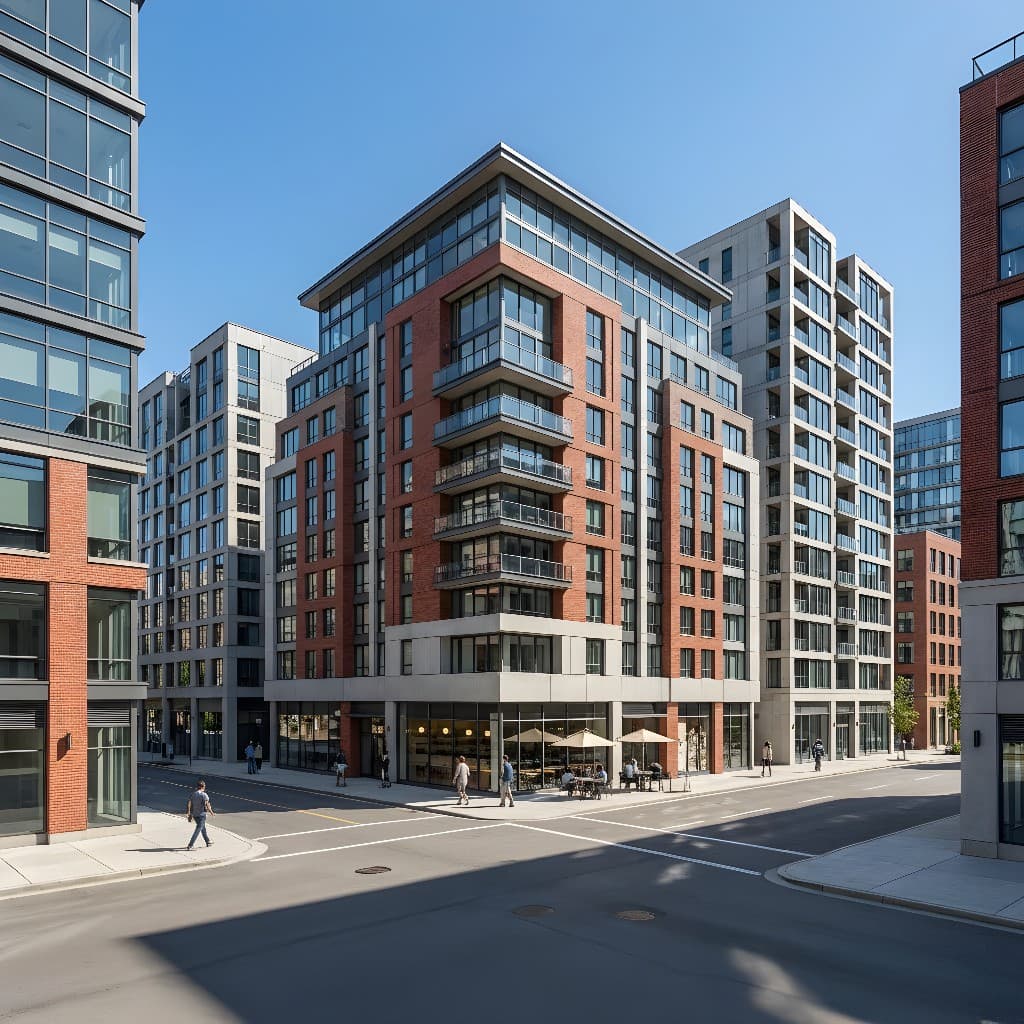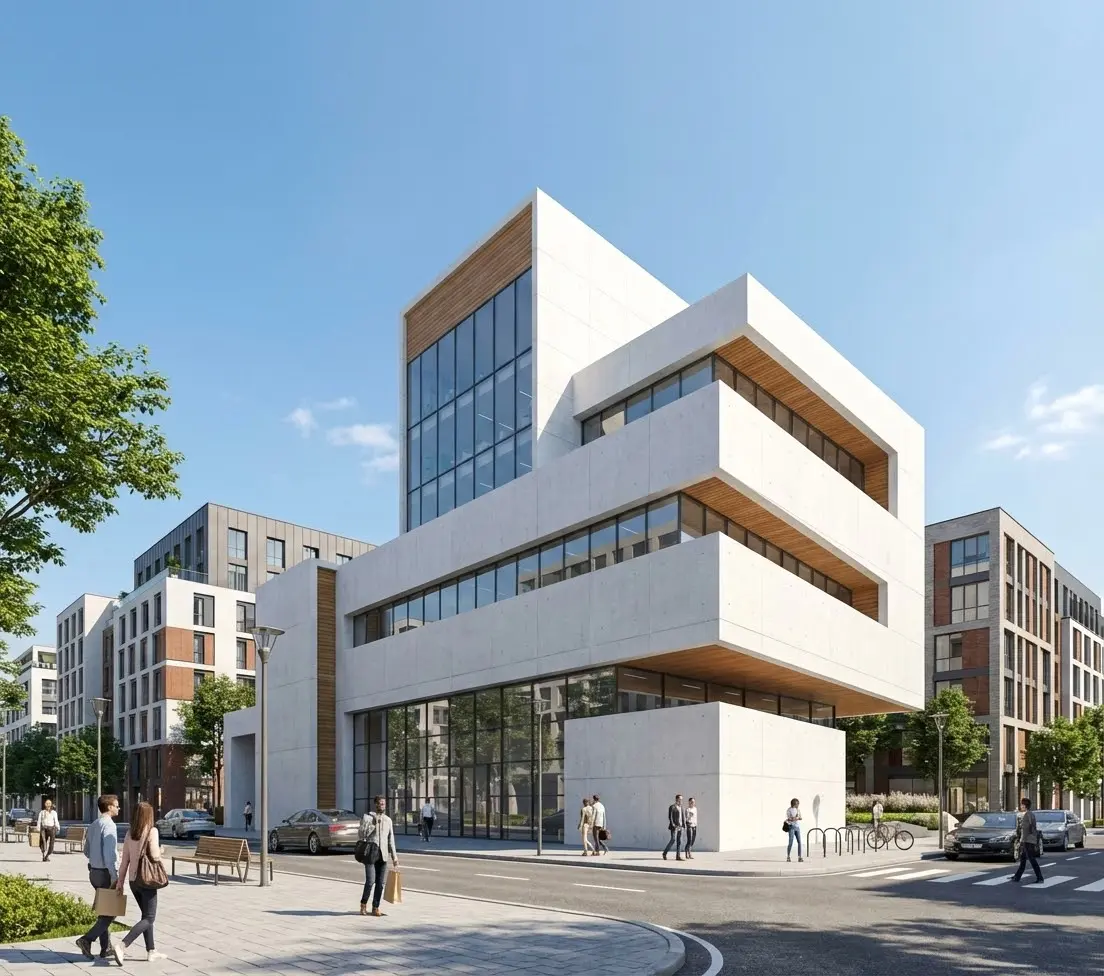
Every real estate agent has had the conversation. The sellers don't want to pay for staging. The house is sitting on the market. The photos look like a crime scene — bare rooms, personal clutter, dated furniture — and the online click data tells the whole story.
Virtual staging and AI rendering were supposed to solve this, and in principle they do. But the question agents actually want answered is straightforward: does the investment pay off, and by how much?
This guide answers that question with real numbers. We look at the cost side (traditional staging vs. AI rendering), the revenue side (days-on-market reduction and sale price premium), and a practical case study showing how the math works across a typical agent's listing portfolio. The short answer is that AI rendering ROI for real estate agents is among the clearest ROI calculations in the business — but only if you understand where the value actually comes from.
The Cost Side: What Staging Actually Runs Per Listing
Start with the cost comparison, because the difference between physical and AI staging is larger than most agents expect.
Traditional Physical Staging
Physical staging — where a staging company installs actual rental furniture and accessories — is the gold standard for occupied or vacant luxury listings. Typical costs:
- Consultation fee: $150–$300 one-time
- Initial staging setup: $1,500–$4,000 for a 2,000 sq ft home (furniture delivery, installation, styling)
- Monthly rental fee: $500–$1,500/month while the property is listed
- De-staging and pickup: Often included, sometimes $200–$400 extra
- Total for a 2-month listing: Typically $2,500–$7,000+
For a mid-market listing at $450,000, a $3,500 staging bill represents roughly 0.78% of the sale price — a significant line item that sellers often resist, and agents sometimes absorb to win the listing.
AI Virtual Staging
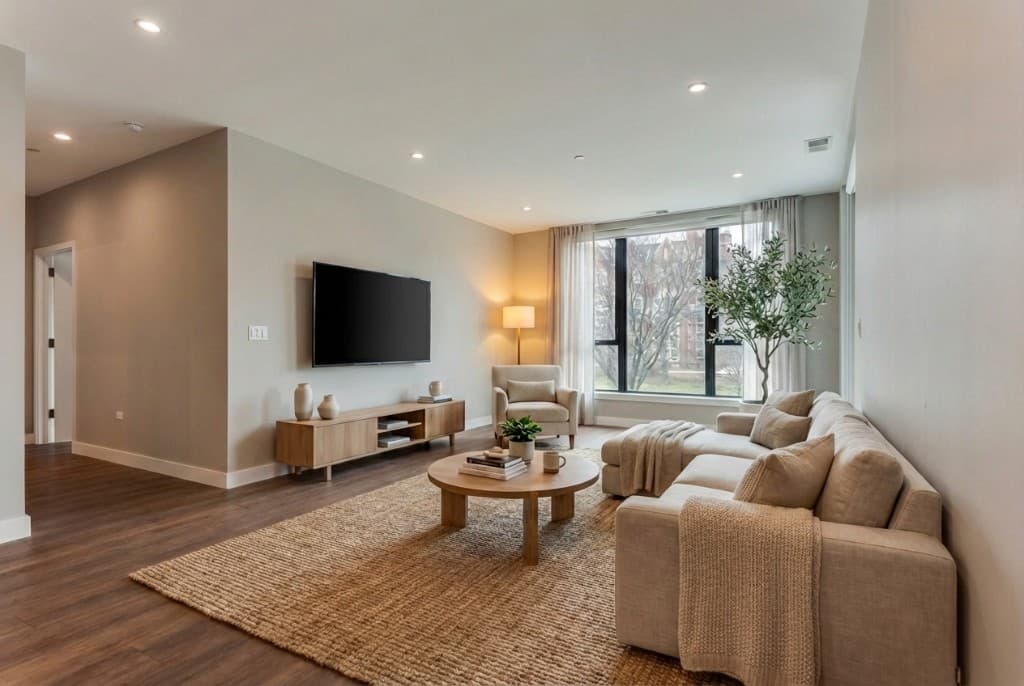
AI virtual staging works from photos of the empty or occupied space. The AI adds photorealistic furniture, décor, and styling to the room in the photograph — producing images used in listing photos, online portals, and marketing materials.
With a platform like Rendershop, the economics look like this:
- Per-image cost: A few dollars per rendered image
- Typical listing (6–10 staged rooms): $15–$60 total for the full set
- Turnaround time: Same day — often within minutes per image
- Revision cost: Minimal — regenerate with a different prompt if a style isn't right
- Total per listing: Typically $15–$80, including multiple style variations
For the same listing where physical staging costs $3,500, AI virtual staging costs roughly $40. Even accounting for professional photography (which you need for both approaches), the cost difference is approximately 50:1 to 100:1.
Days on Market: Where the Real Money Is
Cost reduction alone doesn't capture the full ROI picture. The bigger financial impact of staging — AI or physical — comes from reducing days on market (DOM). And this is where the numbers get genuinely compelling.
Industry research consistently shows that staged listings sell faster than unstaged ones. The National Association of Realtors has tracked this for years: staged homes spend significantly fewer days on market than non-staged equivalents in the same price range and market. Studies targeting specifically virtual and AI staging show similar DOM reductions, with analyses typically finding 30–50% faster sales for properties that receive professional virtual staging treatment.
Why does this matter for ROI? Two reasons.
Seller Carrying Costs
Every month a property sits unsold costs the seller money: mortgage interest, property taxes, insurance, utilities, and HOA fees where applicable. For a $450,000 property with a $350,000 mortgage at 6.5%, the monthly carrying cost is roughly $2,275 in interest alone — plus another $500–$800 in taxes, insurance, and utilities. That's $2,700–$3,000 per month in total holding costs.
If staged listings sell 3–6 weeks faster than unstaged ones, the carrying cost savings alone amount to $2,000–$4,500 per property. Against an AI staging cost of $40–$80, that's a 25x to 100x return on the staging investment — for the seller. This math is one of the most convincing arguments you can make to a seller who hesitates at paying even a minimal staging fee.
Agent Throughput
For agents, the ROI calculation is different but equally clear. If faster DOM means an agent can close 10–15% more listings per year, the revenue impact is direct and compounding. An agent closing 20 listings per year at an average commission of $8,500 earns $170,000. A 10% throughput increase from faster DOM — two more listings per year — adds $17,000 in income. Against staging costs of $40–$80 per listing across 22 listings ($880–$1,760 total), the return is roughly 10x to 20x.
Sale Price Premium: Does Staging Actually Move the Needle?
The sale price impact of staging is more nuanced than DOM reduction. The research shows a premium, but it's not as large as the staging industry sometimes claims — and it depends heavily on market conditions, price point, and buyer psychology.
The most credible estimates put the sale price premium from staging at 1–5% above comparable unstaged listings. For a $450,000 property, that's $4,500–$22,500 in additional sale proceeds. The higher end of this range applies in competitive markets where multiple offers are common and presentation is a meaningful differentiating factor in buyer decision-making.
The mechanism is straightforward: buyers who can visualize living in a space make faster decisions and are more willing to offer at or above asking price. Buyers who can't picture themselves in an empty room — particularly first-time buyers who lack the spatial imagination that experienced purchasers develop — tend to low-ball, negotiate harder, or skip properties that don't immediately appeal to them online.
Online listing click-through rates tell a related story. Listings with staged photos consistently show 40–60% higher click-through rates from portal thumbnails than unstaged equivalents. More clicks generate more showings. More showings produce more offers. More offers create a stronger final price. The staged photo is the top of the funnel; the sale price premium is the bottom.
For more on what the evidence shows about virtual staging outcomes, see our guide to virtual staging for real estate.
Full Cost–Benefit Comparison: AI Staging vs. Physical Staging vs. No Staging
| Factor | No Staging | AI Virtual Staging | Physical Staging |
|---|---|---|---|
| Upfront cost (6 rooms) | $0 | $30–$80 | $2,500–$7,000 |
| Turnaround time | Instant (no prep) | Same day | 3–10 days |
| Online click-through lift | Baseline | +40–60% | +40–60% |
| Days-on-market reduction | Baseline | 30–50% faster | 30–70% faster |
| Estimated sale price premium | Baseline | 1–3% | 1–5% |
| Style variations | N/A | Unlimited, instant | One style; costly to change |
| Works in occupied homes | N/A | Yes — virtually clears and restyles | No — requires vacant space |
| Net ROI on $450k listing | $0 staging investment | $4,000–$13,500+ value created | $2,000–$15,000 value after costs |
Case Study: Five Listings, Two Approaches
To ground the numbers in a realistic scenario, consider two agents — Agent A and Agent B — each with five comparable vacant listings in a mid-market suburban area. Average list price: $380,000. Market average DOM: 42 days.
Agent A: Standard Photography, No Staging
Agent A lists all five properties with standard photography of the empty rooms. The photos are technically fine — well-lit, straight angles — but the empty rooms communicate nothing about how a buyer might live in the space. Online engagement runs at market average.
- Average DOM across 5 listings: 43 days (near market average)
- Average sale price: $376,000 (slight discount to list — typical for extended DOM)
- Staging cost per listing: $0
- Total commission at 2.5%: $47,000
Agent B: Professional Photography + AI Virtual Staging
Agent B lists all five properties with professional photography plus AI virtual staging of the main living areas, primary bedroom, and kitchen — typically 6–8 rooms per listing. Each listing takes an afternoon of AI work and costs roughly $50 in staging renders.
- Average DOM across 5 listings: 27 days (37% reduction)
- Average sale price: $385,400 (approximately 1.4% above list — competitive offers)
- Staging cost per listing: $50 average
- Total staging investment: $250
- Total commission at 2.5%: $48,175
The direct commission difference is $1,175 — meaningful but not dramatic. The more important effect is throughput. Agent B closed those five listings in roughly 27 days each instead of 43. That's 80 agent-days recovered across the five listings. In a market where an agent actively manages 6–10 listings at a time, faster DOM means they can take on more listings without increasing workload.
At a portfolio scale of 20 listings per year, Agent B's faster DOM pattern means they can carry 2–3 more active listings simultaneously, potentially closing 22–24 listings versus Agent A's 20 — a $17,000–$34,000 income difference, against $1,000 in total AI staging costs for the year. That's the compounding ROI that makes this math genuinely compelling.
How to Track Your Own AI Staging ROI
The case study above uses estimates. To measure your actual ROI, track three numbers across your listings for 6 months:
- Days on market: Record DOM for every listing, tagged by whether it used AI staging, physical staging, or no staging. Compare averages after 10+ data points.
- List-to-sale price ratio: Track whether staged listings sell closer to — or above — list price compared to unstaged ones. Even a 0.5% difference compounds meaningfully at scale.
- Online click-through rate: Most MLS systems and listing portals (Zillow, Realtor.com) provide view counts and click-through data. Compare CTRs between staged and unstaged listing photos — this is the most sensitive leading indicator of buyer engagement and often shows a difference within the first 72 hours of a listing going live.
After 10–15 listings, you'll have your own empirical data that's more valuable than any industry average. Agents who build a consistent AI staging workflow and track its impact systematically are the ones who can make the most confident investment decisions — and present the clearest value proposition to sellers who ask whether staging is worth it.
The argument to a reluctant seller stops being "staging generally helps." It becomes: "My AI-staged listings sell in an average of 27 days and at 101.4% of asking. Here's the data from my last 15 transactions. The staging costs $50 and I pay for it myself." That conversation closes differently. Check our pricing page to see current per-image and subscription options.
Where AI Staging Has a Specific Advantage Over Physical
Occupied Listings with Dated or Cluttered Furniture
Physical staging requires a vacant space — you can't install rental furniture while the sellers are still living in the home. AI staging has no such constraint. You can photograph the occupied space and use AI to virtually replace or restyle the existing furnishings. This is particularly useful for sellers who can't vacate the property during the listing period, or whose personal furniture style is unlikely to appeal to the target buyer demographic.
Multiple Style Variations for Broader Buyer Appeal
With physical staging, you pick one style and install it — usually a safe, neutral contemporary look. With AI staging, you can produce the same room in three or four different aesthetics in an afternoon: a clean Scandinavian minimal version, a warmer mid-century version, a coastal casual version. Some agents use multiple style variations across their marketing channels, targeting different buyer demographics with the most relevant visual story.
Speed to Market
Physical staging typically takes 3–10 days to schedule, install, and photograph. AI staging is available the same day you have photos. In fast-moving markets where listing on Thursday for the weekend showing rush is the standard playbook, the ability to go from empty photos to fully staged listing photos in hours — not days — is a genuine competitive advantage.
Frequently Asked Questions
Do buyers notice or care that the staging is virtual rather than physical?
Most buyers don't distinguish between physical staging photos and high-quality AI virtual staging photos in online listings — they're both "furnished room photos." The emotional trigger is the same: seeing the space as livable rather than empty. Where buyers notice a difference is at an in-person showing, where they arrive expecting the furnished rooms from the photos and find an empty space. Best practice is to disclose AI staging clearly in listing descriptions ("Photos include virtual staging for illustrative purposes") and pair staged photos with empty-room photos so buyers arrive with accurate expectations. Agents who handle disclosure well consistently report that buyers appreciate the honest approach.
Which rooms deliver the highest ROI from AI staging?
Consistently: the living room, primary bedroom, and kitchen — in that order. These are the three rooms buyers click on most in listing photo galleries and the ones that most influence the emotional decision to book a showing. Dining rooms and home offices are secondary priorities. Bathrooms and utility spaces generally don't benefit significantly from staging. If time or budget is limited, stage the living room, primary bedroom, and kitchen and present secondary rooms as clean empty-space photography.
Should I absorb the AI staging cost or pass it to the seller?
At $40–$80 per listing, most agents absorb AI staging costs as a standard part of their marketing package — similar to professional photography. This removes any friction from the staging conversation and positions the agent as a professional who invests in their listings. Some agents build it into a tiered service offering: a standard package with basic photography, and a premium listing package that includes professional photography plus AI staging. Either approach works; the key is making AI staging a default part of your listing process rather than an optional add-on sellers can decline. The cost is too low and the impact too consistent to make it a seller decision.
Is AI staging as effective as physical staging for high-end listings?
For listings above $1.5M–$2M in most markets, physical staging still tends to produce a stronger in-person impression — luxury buyers who tour multiple $2M+ properties in a day are sophisticated consumers of space and lifestyle, and physical staging communicates quality in ways that photos alone can't fully replicate. The practical approach for high-end listings is to use both: AI staging for the listing launch photos (available immediately, polished, and targeted to the buyer profile), and physical staging for the property itself during the showing period. The two are not mutually exclusive, and AI staging for the digital marketing assets costs almost nothing against the physical staging budget at the luxury tier.
The Bottom Line
The ROI case for AI rendering and virtual staging in real estate is one of the clearest in agent marketing. The cost is negligible — $40–$80 per listing, which most agents absorb without a second thought. The benefits are measurable: faster DOM, higher online click-through rates, stronger listing engagement, and a consistent 1–3% sale price premium in competitive markets.
The bigger picture is throughput. Agents who consistently list with AI-staged photography close listings faster, which means they can take on more listings per year with the same time investment. At a portfolio of 20+ listings, the compounding income effect of 30–40% faster DOM dwarfs the staging cost by orders of magnitude. This isn't a marginal efficiency gain — it's a structural advantage that accumulates across every listing, every year.
The agents who benefit most aren't those with the highest-price listings. It's consistent mid-market agents who build AI staging into every listing as a non-negotiable standard, track the DOM and price-ratio data, and use that evidence to win more listings from sellers who ask whether preparation makes a difference. The answer — backed by your own transaction history — is yes, and here's the proof.
Stage Your Next Listing in Minutes
Upload photos of your vacant property and get photorealistic furnished rooms ready for your listing. Try Rendershop free — no credit card required.
— The Rendershop Team