Not legal advice. Real estate disclosure laws change frequently and enforcement varies by brokerage and MLS. Always verify requirements with your state real estate commission, local MLS administrator, and legal counsel before listing.
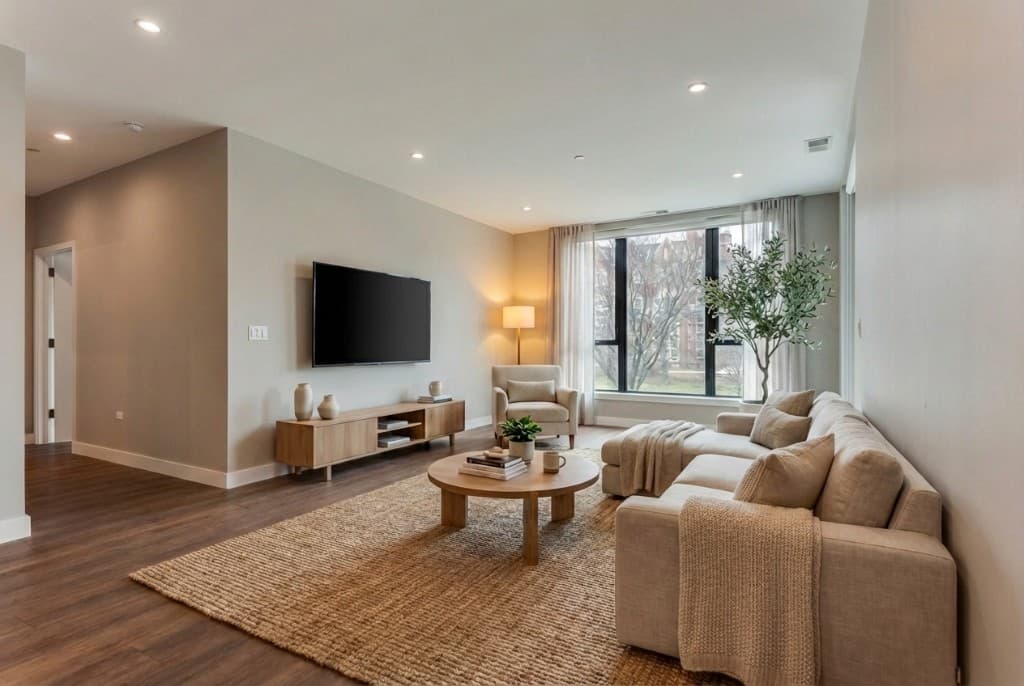
Virtual staging has gone from a niche workaround to a standard tool in the listing agent's workflow. The economics are straightforward: a virtually staged photo costs a fraction of physical staging, takes hours instead of days, and produces imagery that buyers respond to just as strongly. According to the ROI data on AI staging, listings with staged photos sell faster and at higher prices regardless of whether the furniture is real or rendered.
But the tool's power comes with a clear professional obligation. When a buyer walks into a vacant property expecting the elegant living room from the listing photos, the gap between expectation and reality is jarring — and potentially deceptive. That's the consumer harm that disclosure rules are designed to prevent.
The good news: disclosure is simple. A brief, clear label on each virtually staged photo is enough to satisfy the vast majority of MLS rules, NAR ethics requirements, and state regulations. The bad news: many agents don't know what exactly is required, which creates unnecessary license risk. This guide gives you a practical framework so you can use virtual staging confidently and compliantly.
What Counts as "Virtual Staging" for Disclosure Purposes?
Not every photo edit triggers a disclosure obligation. The distinction that matters in most jurisdictions is whether the image shows something that does not physically exist in the property. Here's a useful breakdown:
| Edit Type | Disclosure Typically Required? | Notes |
|---|---|---|
| Adding furniture to an empty room | Yes — always | The core use case; universally requires labeling |
| Removing clutter or personal items | Rarely, but check MLS rules | Some MLSs treat removal of existing items as also requiring disclosure |
| Sky replacement / blue sky edits | Usually no | Standard photo enhancement; widely accepted. Avoid if hiding flood risk. |
| Adding a pool, deck, or exterior feature | Yes — always | Adding non-existent structures is deceptive without disclosure |
| Changing wall colors or flooring | Varies by MLS | Some MLSs require disclosure if finishes differ from current condition |
| Correcting lens distortion or brightness | No | Standard photographic correction, not staging |
The safest rule: if you added or removed something that physically exists (or doesn't exist) in the property, disclose it. When in doubt, label it. The downside of over-disclosing is zero; the downside of under-disclosing can be a disciplinary complaint.
The Baseline: NAR Ethics and MLS Rules
Before diving into state-specific rules, it's worth understanding the two layers of requirements that apply to most licensed real estate agents in the US regardless of which state they work in.
NAR Code of Ethics — Article 12
The National Association of Realtors' Code of Ethics requires that members present a "true picture in their advertising and representations." Article 12 has been interpreted by NAR's Professional Standards committees to require clear disclosure when listing photos have been digitally altered in ways that misrepresent the property's current condition.
NAR doesn't prescribe a specific label format, but the Standard of Practice guidance requires that:
- Virtually staged photos be clearly identified as such
- The disclosure appear in the photo itself or immediately adjacent to it (not buried in fine print)
- Photos not misrepresent the current, as-is condition of the property
MLS Rules
Most Multiple Listing Services in the US have adopted photo rules that either explicitly address virtual staging or incorporate NAR's guidance by reference. The most common requirement across major MLSs is a visible watermark or caption on any virtually staged photo, typically reading "Virtually Staged," "Digitally Staged," or "Virtual Staging".
Specific MLS rules vary significantly. Some require the label to appear as a watermark on the image itself; others permit it as a photo caption in the listing. A small number of MLSs ban virtually staged photos from the primary listing photo position entirely. Always check your local MLS handbook — this is the most granular and enforceable layer of requirements.
Virtual Staging Disclosure Requirements: A State-by-State Overview
No single federal law governs real estate photo disclosure in the US. Requirements are patchwork — a combination of state real estate commission guidance, MLS rules, and, increasingly, state consumer protection statutes. Below is the current landscape for the states where virtual staging is most commonly used. Check your state commission's website for the most current guidance.
California
California has some of the most explicit requirements. The California Department of Real Estate and the California Association of Realtors have both issued guidance requiring clear disclosure on digitally altered listing photos. The CRMLS (California Regional MLS), the largest MLS in the state, requires a "Virtually Staged" watermark or caption on any digitally staged image. California's consumer protection framework — which courts have interpreted broadly — also creates civil liability risk for deceptive advertising, making disclosure a legal as well as ethical obligation.
Florida
Florida has explicit photo disclosure requirements embedded in its real estate licensing statutes (Chapter 475, F.S.) and associated rules. The Florida Real Estate Commission (FREC) requires that real estate advertising not be misleading or deceptive. FREC guidance specifically addresses digitally altered photos, requiring clear disclosure. Most Florida MLSs — including Miami MLS (MIAMI Association of Realtors), My Florida Regional MLS, and Beaches MLS — have adopted watermark requirements that align with this guidance.
New York
The New York Department of State's Division of Licensing Services and the New York State Association of Realtors have issued guidance on digital photo alterations. New York's real estate licensing law prohibits misleading advertising, and Department of State guidance treats undisclosed virtual staging as potentially deceptive. OneKey MLS, serving the greater New York metro area, requires clear disclosure labels on virtually staged photos. The New York City market has historically had strong informal norms around this — disclosure is standard practice at major brokerages.
Texas
The Texas Real Estate Commission (TREC) prohibits misleading advertising under its license holder conduct rules. While TREC has not issued specific virtual staging regulations, its general advertising guidelines apply: representations that are materially misleading can result in license discipline. The Houston Association of Realtors MLS (HAR) and Austin Board of Realtors MLS (ABOR) both require clear disclosure on altered images, including virtually staged photos. Texas agents should treat clear labeling as mandatory under existing advertising rules.
Illinois
The Illinois Department of Financial and Professional Regulation (IDFPR) enforces conduct standards for real estate licensees. MRED (Midwest Real Estate Data), the dominant MLS in the Chicago market and surrounding region, has explicit requirements for disclosure of digitally enhanced photos, including virtually staged images. MRED's rules require the label to appear in the photo or as an accompanying caption, and MRED has actively enforced this rule with fines.
Washington, Colorado, Georgia, and Most Other States
Most other states follow the same pattern: general misleading-advertising prohibitions in the licensing statute, NAR Code of Ethics requirements (for Realtors), and MLS-specific rules that typically require a "Virtually Staged" disclosure on any digitally altered photo. The language differs; the principle is consistent. States that have not yet issued specific virtual staging guidance default to the general anti-deception provisions of their real estate licensing laws, which are broad enough to reach undisclosed digital alterations.

Side-by-side disclosure — showing both the vacant room and the staged version — is the gold standard for transparency
How to Disclose Virtual Staging Correctly
The mechanics of compliant disclosure are not complicated. The key is making sure the disclosure is visible, proximate, and unambiguous. Here are the accepted methods, roughly in order of preference:
Method 1: In-Image Watermark
A text overlay on the photo itself — typically in a corner — is the most unambiguous form of disclosure. The watermark travels with the photo wherever it appears: MLS listing, social media, listing flyers, third-party portals. There is no risk of the disclosure being separated from the image.
Accepted watermark language:
- "Virtually Staged"
- "Digitally Staged"
- "Virtual Staging — Furniture Not Included"
- "AI-Staged Photo — Property is Currently Vacant"
Most virtual staging services — including Rendershop — can add this watermark automatically or give you the option to do so before downloading.
Method 2: MLS Photo Caption
Most MLS platforms allow agents to add captions to individual photos. A caption reading "Virtually Staged" or "Digital staging — property currently vacant" under each altered photo satisfies the disclosure requirement on the MLS itself. The limitation: captions may not carry over to third-party syndication sites like Zillow or Realtor.com. This is why many compliance-focused brokerages require watermarks even when the MLS permits captions.
Method 3: Listing Remarks Disclosure
Some agents add a general notice to the listing's public remarks: "Select photos in this listing include virtual staging. The property is currently vacant. Furniture and decor are not included." This is the weakest form of disclosure — it requires the buyer to read the remarks and connect them to specific photos. Many MLSs explicitly state that remarks-only disclosure does not satisfy their photo disclosure rules. Use this as a supplement, not a substitute.
Best Practices for Compliant Virtual Staging
- Always include the vacant-room photo alongside the staged version. Showing both the current condition and the staged possibility is the gold standard for transparency. It also builds buyer trust — the listing isn't hiding anything. Many savvy agents upload the vacant photo immediately before or after each staged photo in the MLS gallery.
- Watermark the image, not just the caption. Your staged photo will appear in many places beyond the MLS — syndicated portals, social media, printed flyers, email campaigns. A watermark is the only disclosure that travels with the photo everywhere.
- Only stage vacant rooms, not occupied ones. Adding virtual furniture to a room that already has different furniture is more deceptive than staging an empty room, and harder to justify under any disclosure framework.
- Don't add non-existent exterior features. A virtual pool, a rendered deck, or a digitally added garage — in a property that doesn't have them — crosses a clear line from styling into misrepresentation. This is the most common source of licensing complaints in the virtual staging space.
- Check your brokerage policy before listing. Many brokerages have internal compliance guidelines that go beyond MLS rules. Your brokerage may require broker review of virtually staged photos, specific watermark language, or prohibit certain types of alterations. When in doubt, ask your managing broker.
Major MLS Virtual Staging Disclosure Requirements at a Glance
| MLS / Market | Disclosure Required? | Accepted Method | Hero Photo Rule |
|---|---|---|---|
| CRMLS (California) | Yes | Watermark or caption | Staged photo allowed as primary |
| MRED (Chicago) | Yes | Watermark or caption; actively enforced | Check current MRED handbook |
| HAR (Houston) | Yes | Label in photo or caption | Staged photo allowed as primary |
| OneKey MLS (NY Metro) | Yes | Visible disclosure label required | Verify primary photo policy |
| ABOR (Austin) | Yes | Watermark or caption | Staged exterior not permitted as hero |
| Most regional MLSs | Yes | Follows NAR guidance; watermark preferred | Varies — check local rules |
Rules are subject to change. Verify current requirements directly with your MLS administrator.
Frequently Asked Questions
Does virtual staging disclosure hurt my listing's performance?
No — and the evidence points the other way. Buyers have become sophisticated enough to expect virtual staging on vacant listings. A clear "Virtually Staged" label sets the right expectation and prevents the negative experience of showing up to a vacant home when the photos showed a furnished one. Listings with transparent staging disclosures and high-quality renders tend to get more showings, not fewer.
Can I use a virtually staged photo as the primary listing photo?
This varies by MLS. Most MLSs permit virtually staged interior photos as primary images when properly labeled. A smaller number — particularly in some Texas markets — restrict virtually staged exterior photos from the primary position, since the exterior is what buyers see in map view and thumbnail. Always check your MLS's specific photo rules. When uncertain, use the actual exterior photo as the primary.
What happens if an agent doesn't disclose virtual staging?
Consequences range from MLS fines (some MLSs impose fines of $250–$1,000+ per violation) to NAR ethics complaints, state real estate commission disciplinary action, and — in egregious cases — civil suits from buyers who claim deceptive advertising. The MLS fine is the most common outcome; it's also the easiest to avoid entirely by simply labeling your photos.
Do I need to disclose if I only removed clutter or cleaned up the photo?
Standard photo editing — color correction, exposure adjustment, and minor cleanup — generally doesn't require disclosure. Removing physical items that exist in the property (personal items, clutter, furniture) is more ambiguous and some MLSs require disclosure for "object removal" edits. Adding items that don't exist in the property always requires disclosure. When in doubt, disclose.
Is there a standard watermark size or placement that all MLSs accept?
There is no universal standard. Most MLSs require only that the disclosure be "visible" or "clear." A common convention is text in a corner of the image — white or semi-transparent, 14–18px equivalent — that is readable without obstructing the photo. The watermark should be legible when the photo is viewed at thumbnail size in MLS search results, not just at full resolution.
Disclose Simply, Stage Powerfully
Virtual staging is one of the highest-ROI tools available to listing agents, and disclosure requirements are genuinely easy to satisfy. A visible "Virtually Staged" label on each altered photo — ideally as a watermark — protects your license, satisfies NAR ethics, meets MLS rules in virtually every market, and builds rather than erodes buyer trust.
The agents who get tripped up on virtual staging compliance are typically either unaware of the rules or believe they're being clever by not disclosing. Neither excuses the violation. The agents who do it right treat disclosure as part of the workflow — they add the label at the point of download and never think about it again.
Rendershop's virtual staging tool is designed with this workflow in mind. See our full feature set including export options, and check pricing to see how it fits into a high-volume listing workflow. Upload a photo, get a staged render, add your disclosure label, and list with confidence.
Virtual Staging That's Built for Agents
Upload a vacant room photo and get a photorealistic staged render in minutes. Disclosure-ready, MLS-compliant, and a fraction of the cost of physical staging.
— The Rendershop Team