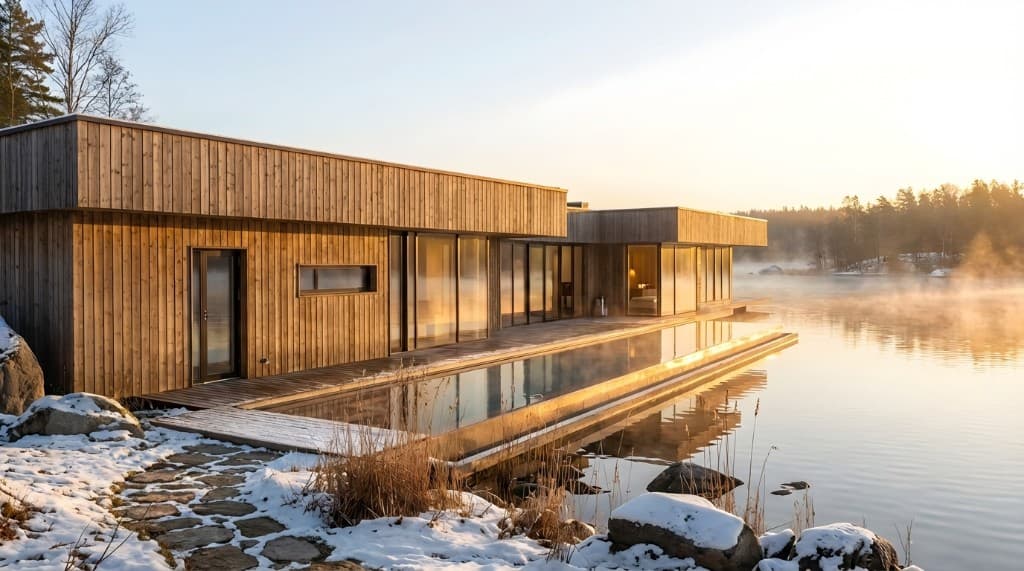
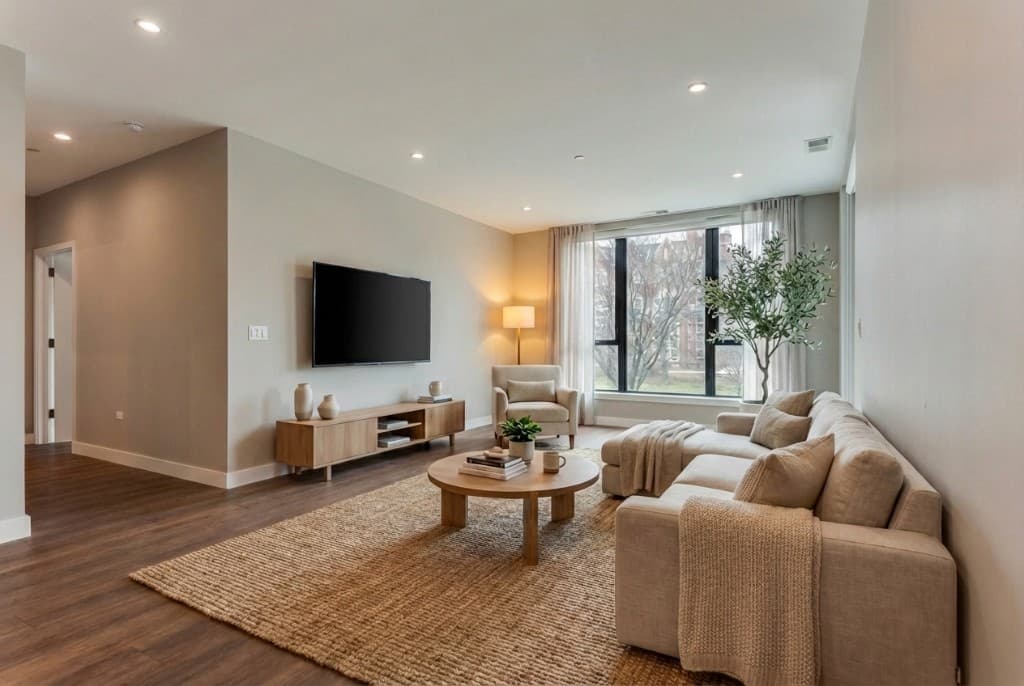
Most real estate photography businesses run on a single transaction: show up, shoot the listing, deliver the gallery, invoice the agent. It's a good business, but it's also a business with a hard ceiling — you can only shoot as many listings as there are hours in the day, and the fee per shoot rarely changes much year to year. AI rendering opens a second, higher-margin revenue line that doesn't require a single extra minute on site: turning the photos you already captured into virtually staged, enhanced, or twilight-converted images the agent pays extra for.
This isn't a hypothetical. Virtual staging has been a paid add-on in real estate photography for over a decade — traditionally outsourced to overseas rendering studios with 24–48 hour turnarounds and per-image costs of $20–$50. What's changed is that AI rendering tools now let photographers do this staging themselves, in-house, in minutes, at a fraction of the outsourced cost — which means the markup you keep is dramatically higher.
Why Photographers Are Uniquely Positioned to Offer This
AI rendering needs one thing above all else: a clean, well-lit, well-composed source photo. That's exactly what a professional real estate photographer already produces on every shoot. Compare that to a homeowner or agent trying to AI-stage a blurry phone photo — the rendering engine has far less to work with, and the results show it. Photographers who add AI staging to their workflow are starting from the best possible input, which means:
- No new equipment or skill required.You're not learning 3D modeling or CGI. AI rendering tools take the same RAW or JPEG file you already deliver and generate a styled version from it — the skill is prompting and quality control, not new gear.
- Zero incremental shoot time.Staging renders are generated after the shoot, from photos you've already captured. There's no extra time on site, no extra travel, no extra scheduling — just post-production work you can do from a laptop.
- You control quality end-to-end.When you outsource staging to a third-party studio, you're trusting someone else with your client's images and your reputation. Doing it in-house means you can hold every image to your own bar before it goes to the agent.
- It strengthens the relationship you already have.Agents already trust you with their listings. Offering staging as an add-on means one more reason to book you instead of a competitor — and one more line item on every invoice.
Services You Can Add to Your Menu
Virtual Staging for Vacant Listings
This is the highest-demand add-on. Vacant homes consistently photograph worse and sell slower than furnished ones, and agents know it. Offer a per-room virtual staging package: the agent selects which rooms to stage from your delivered gallery, you run each through AI rendering with a style direction (modern, farmhouse, coastal, luxury), and deliver staged versions alongside the originals. Price per room, with a package discount for staging an entire listing.
Twilight Conversions Without a Second Shoot
Twilight exteriors are one of the most requested — and most schedule-dependent — shots in real estate photography, since they require a very specific window around sunset. AI rendering lets you convert a daytime exterior into a photorealistic twilight image without returning to the property or timing a second visit. This is pure upside: an image you couldn't otherwise offer without a second trip, sold as a premium add-on. See our full guide to AI twilight rendering for prompt techniques that produce consistent results.
Sky Replacement and Weather Cleanup
Overcast shoot days, dead lawns, and construction equipment in the neighbor's yard are all fixable in an AI render — replace a flat gray sky with a clear blue one, green up a dormant lawn, or remove a distracting element from the frame. This has traditionally been manual Photoshop work billed by the hour; AI rendering does it in a single pass, which means you can offer it as a flat per-image add-on instead of an open-ended editing fee.
Renovation Previews for Fixer-Uppers
For listings marketed as renovation opportunities, agents often want "after" visuals to help buyers see the potential — a dated kitchen rendered with updated cabinets and counters, or a cluttered basement rendered as a finished rec room. This is a premium, higher-priced add-on since it requires more creative direction, but it's also one agents will pay well for on listings that are otherwise hard to market.
Seasonal and Landscaping Refreshes
A listing shot in winter with bare trees and a gray sky can be rendered with full summer foliage and better curb appeal — useful for listings that sit on the market across a season change, or for developers who want to market a property year-round with consistent seasonal imagery.
In-House AI Rendering vs. Outsourcing to a Staging Studio
| Factor | Outsourced Staging Studio | In-House AI Rendering |
|---|---|---|
| Cost per image | $20–$50 | $3–$15 |
| Turnaround | 24–48 hours | Minutes, same day |
| Quality control | Limited — you review after delivery | Full — regenerate before sending |
| Revision cost | Often a new fee, new wait | Free — regenerate instantly |
| Client data exposure | Shared with a third party | Stays in your workflow |
| Margin you keep | Thin — mostly a markup on their fee | High — most of the sale price is profit |
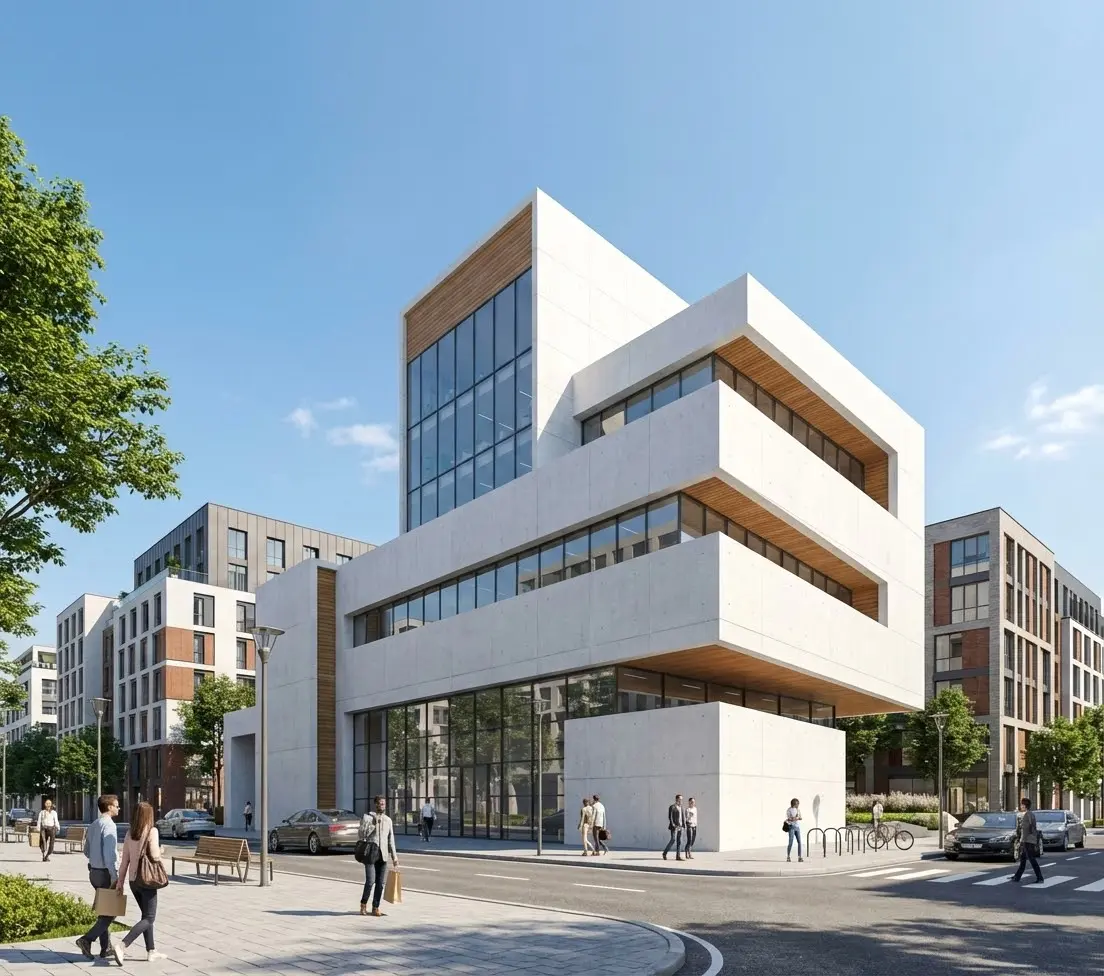
An AI-rendered kitchen, generated from an existing listing photo in a photographer's post-production workflow
Building the Add-On Into Your Business
Step 1: Pick Your Package Structure
Most photographers who succeed with this add-on price it one of two ways: à la carte (per staged image, e.g. $25–$60 per room, priced well above your AI rendering cost) or bundled into a premium listing package (e.g. "Full Listing Package: photography + 5 staged rooms + 1 twilight conversion" at a flat rate). Bundling tends to convert better with agents because it removes the decision friction of picking individual add-ons — but à la carte works well for photographers who want to test demand before committing to new package tiers.
Step 2: Build a Standard Style Library
Rather than starting from scratch on every listing, build three or four go-to style prompts you know produce strong, on-brand results — a modern neutral staging style, a warm traditional style, a twilight conversion prompt, a sky-replacement prompt. Having a tested library means faster turnaround and consistent quality across every job, which matters more to repeat agent clients than any single "wow" image. Our guide on writing effective AI rendering prompts is a good starting point for building that library.
Step 3: Set Expectations on Turnaround
One of the biggest competitive advantages against outsourced staging studios is speed. Where a studio might take a day or two, in-house AI rendering can be delivered same-day — often within the hour. Advertise this explicitly to agents: same-day staged photos for listings going live that week is a meaningfully better offer than anything a traditional studio can promise.
Step 4: Disclose Staging Clearly
As with any virtual staging, deliver both the original and staged versions, and make sure the agent understands which images are AI-staged so they can disclose appropriately in the MLS listing per local rules. This protects you and your client. See our breakdown of virtual staging disclosure rules by state for the current requirements.
Step 5: Market It as a Differentiator
Most local real estate photography markets are competitive on price alone. Offering fast, in-house AI staging — something many competitors still outsource or don't offer at all — is a genuine differentiator you can lead with in outreach to agents and brokerages, not just an upsell you mention after booking.
The Economics: Why the Margin Is So Good
A typical real estate photography shoot fee covers your time, travel, equipment, and editing — margins that are healthy but capped by hours worked. AI staging add-ons work differently: the marginal cost of generating one more staged image is a few dollars and a few minutes of your time, while the price you can charge is set by what the outsourced-studio alternative costs the agent ($20–$50 per image). That gap — a few dollars in, tens of dollars out — is pure margin that doesn't consume any additional shoot-day capacity.
For a photographer shooting 15–20 listings a month, even modest attach rates on staging add-ons (say, a third of listings adding 3–5 staged rooms) can add several thousand dollars a month in high-margin revenue without adding a single extra hour on site.
Frequently Asked Questions
Do I need special software or a subscription to offer AI staging?
You need access to an AI rendering platform — a browser-based tool works fine; no local software installation or powerful hardware is required. Most platforms, including Rendershop, charge per render or via a monthly plan, both of which are easy to fold into your existing cost of doing business given the markup you can charge per staged image.
How much should I charge agents for AI-staged photos?
Most photographers price at or slightly below what an outsourced staging studio would charge ($20–$50 per room), since that's the anchor agents already understand — while your actual cost is a fraction of that. Bundled listing packages that include a set number of staged rooms tend to have the highest attach rate.
Can I use my existing listing photos, or do I need to shoot differently for staging?
Your existing shooting style works well — clear, well-lit, wide-angle real estate photography is exactly the input AI rendering performs best with. No changes to your shoot process are required, though shooting vacant rooms from a corner to capture full wall and floor area tends to give the AI more to work with for staging.
Is it legal or against MLS rules to sell AI-staged photos?
Virtual staging, AI-generated or otherwise, is broadly accepted across MLS systems and by NAR guidance, provided it's clearly disclosed as virtually staged in the listing. It's the agent's responsibility to disclose correctly, but as the photographer you should deliver staged images clearly labeled and separate from unedited originals to make that disclosure easy.
What if an agent wants revisions to a staged image?
This is one of the biggest advantages of doing this in-house: revisions cost you almost nothing. Adjust the style prompt and regenerate — it takes minutes, not a new invoice to a third-party studio and another day of waiting.
A New Revenue Line, Not a New Job
For real estate photographers, AI rendering isn't a threat to the business — it's an extension of it. The photos you're already capturing are the exact input the technology needs, and the skills required to offer staging, twilight conversions, and sky replacement are a natural extension of the post-production work you already do. The photographers who add this to their service menu early are capturing a revenue line that used to belong entirely to outsourced staging studios.
Start small: pick one or two add-ons — virtual staging and twilight conversion are the easiest sells — build a style library you trust, and offer them on your next few listings. The margin and the client response tend to make the case for expanding the offering quickly.
Ready to try it on your own listing photos? Rendershop's AI rendering tools let you generate staged, enhanced, and twilight versions of any photo in minutes.
Add AI Staging to Your Photography Business
Turn your listing photos into a higher-margin service. Upload a photo and get a photorealistic, staged AI render in minutes.
— The Rendershop Team