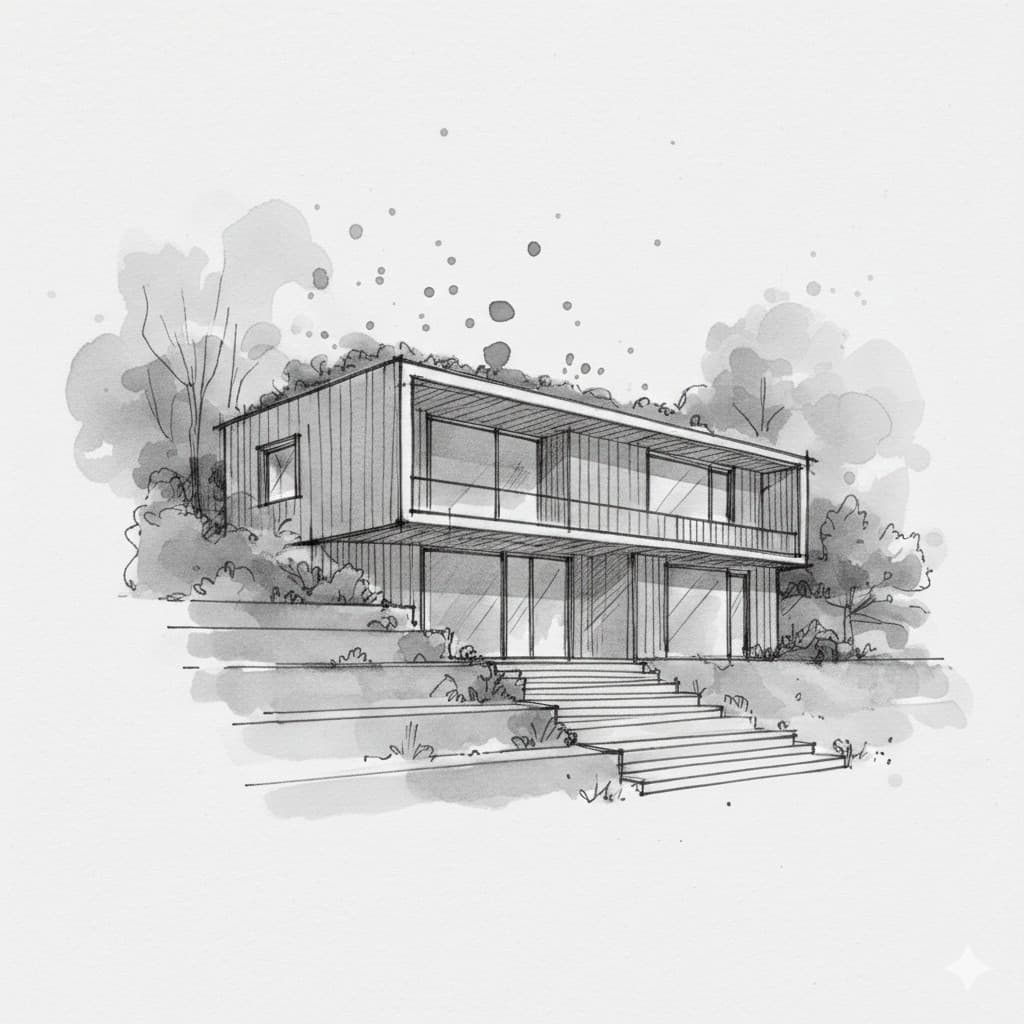
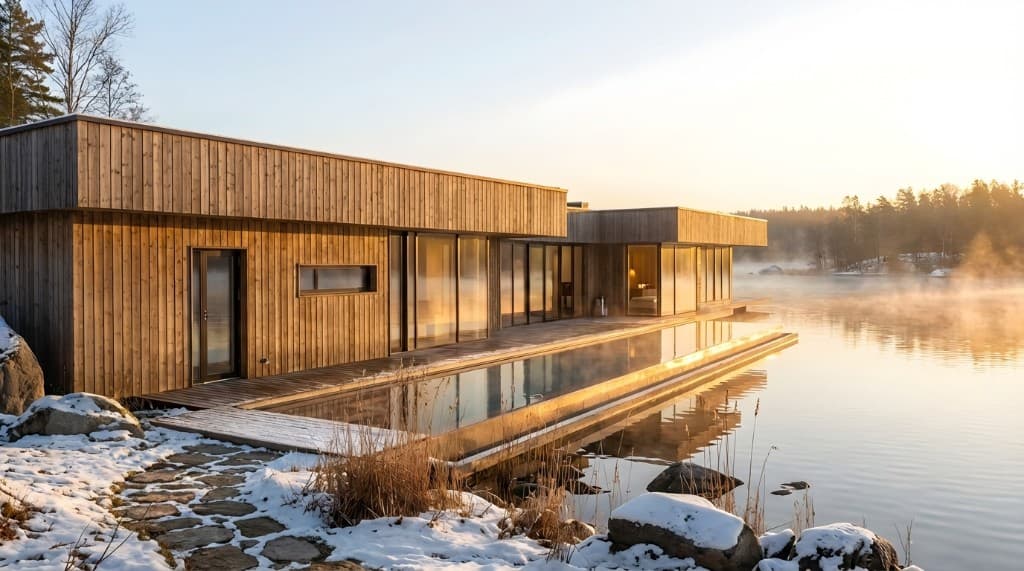
In architectural visualization, lighting isn't just about illumination—it's about storytelling. The right lighting can evoke emotion, highlight design features, create depth, and ultimately convince clients that your design is exactly what they've been dreaming of.
Whether you're rendering exteriors bathed in golden hour warmth or interiors with carefully balanced natural and artificial light, mastering lighting techniques will elevate your visualizations from good to extraordinary.
In this guide, we'll explore professional lighting strategies and how to achieve them using AI rendering tools like Rendershop.
Why Lighting Matters in Architectural Renders
Lighting affects every aspect of how we perceive a space:
Mood & Atmosphere
Warm light feels inviting; cool light feels modern. Dramatic shadows create intrigue; soft light feels peaceful.
Spatial Definition
Light and shadow define edges, create depth, and help viewers understand three-dimensional space in a 2D image.
Material Revelation
Proper lighting reveals textures, reflections, and material qualities that would otherwise go unnoticed.
Time & Context
Lighting tells viewers when the scene takes place and creates a sense of lived-in reality.
Exterior Lighting Techniques
Exterior renders are heavily influenced by the time of day and weather conditions. Each scenario creates a different emotional response and highlights different aspects of the design.
1. Golden Hour (Magic Hour)
Golden hour—the period shortly after sunrise or before sunset—is the most popular choice for architectural renders, and for good reason. The warm, directional light creates long shadows, rich colors, and an inherently appealing atmosphere.
Golden Hour Characteristics:
- • Color temperature: Warm (2500-3500K), orange and gold tones
- • Shadow direction: Long, dramatic shadows at low angles
- • Sky: Gradient from warm horizon to cooler overhead
- • Best for: Residential, hospitality, any design meant to feel welcoming
Golden hour light creates warmth and emotional appeal
Prompt Tips for Golden Hour:
"Modern home exterior at golden hour, warm sunset lighting, long dramatic shadows, orange and gold sky gradient, soft warm glow on white stucco walls"
2. Bright Midday Sun
Midday lighting with clear skies creates harsh, high-contrast images. While often avoided for its unflattering qualities, it can be effective for showcasing bold architectural forms and creating a sense of energy and clarity.
Midday Characteristics:
- • Color temperature: Neutral to cool (5500-6500K)
- • Shadow direction: Short, directly beneath objects
- • Sky: Bright blue, potentially washed out near sun
- • Best for: Commercial, institutional, modern minimalist designs
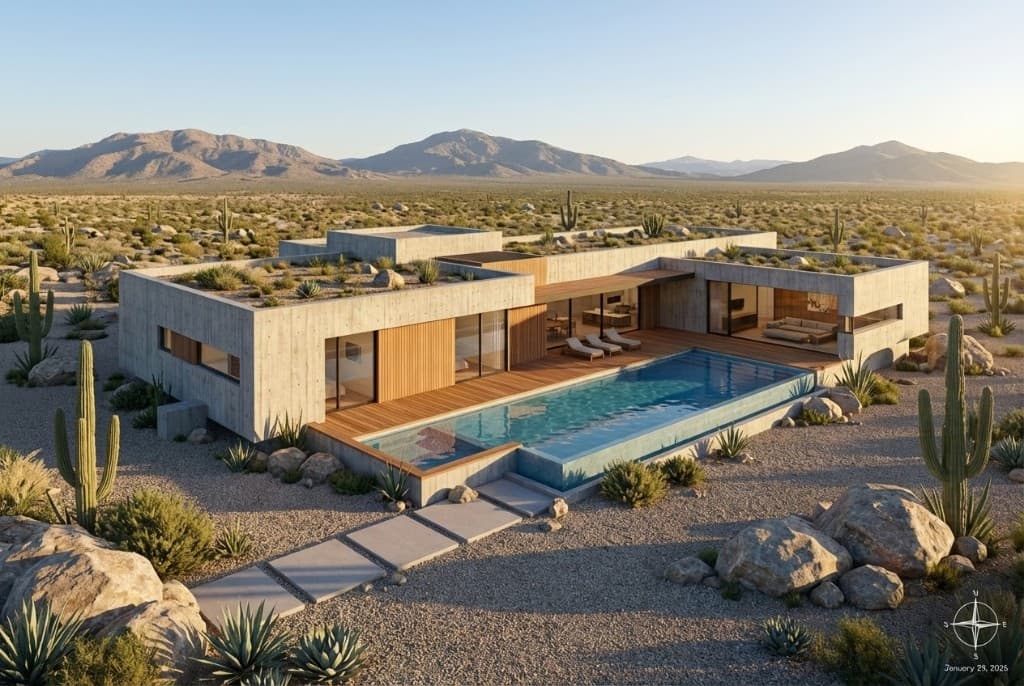
Bright midday light emphasizes bold forms and clean lines
3. Overcast Conditions
Overcast skies act as a giant softbox, creating even, diffused lighting with minimal shadows. This is excellent for showing true material colors and works well for designs where you want to emphasize form over drama.
Overcast Characteristics:
- • Color temperature: Cool, slightly blue-gray (6000-7000K)
- • Shadow direction: Very soft or absent
- • Sky: Uniform gray or white
- • Best for: Accurate material representation, Scandinavian aesthetics
4. Blue Hour & Twilight
The blue hour occurs just before sunrise or after sunset when the sky takes on deep blue tones. Combined with interior lighting, this creates some of the most dramatic and appealing architectural images.
Blue Hour Characteristics:
- • Color temperature: Cool exterior (8000-10000K), warm interior lights
- • Shadow direction: Minimal from sky, cast by interior lights
- • Sky: Deep blue gradient, possibly with remaining sunset colors
- • Best for: Luxury residential, hospitality, showcasing interior warmth
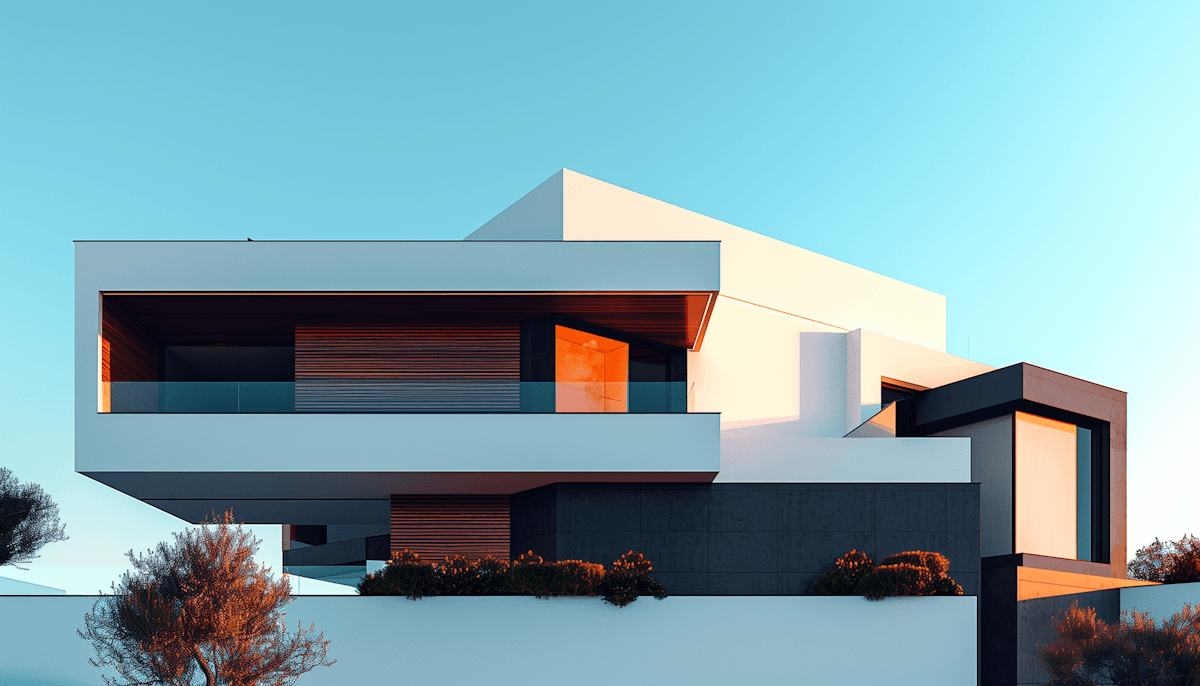
Twilight renders showcase the interplay between cool exterior light and warm interiors
Prompt Tips for Twilight:
"Modern villa at blue hour twilight, deep blue sky, warm interior lights glowing through large windows, ambient exterior lighting, luxury atmosphere"
Interior Lighting Techniques
Interior lighting is more complex, requiring careful balance between natural light from windows and artificial light sources. The goal is to create a realistic, inviting atmosphere that showcases the space effectively.
1. Natural Light Dominated
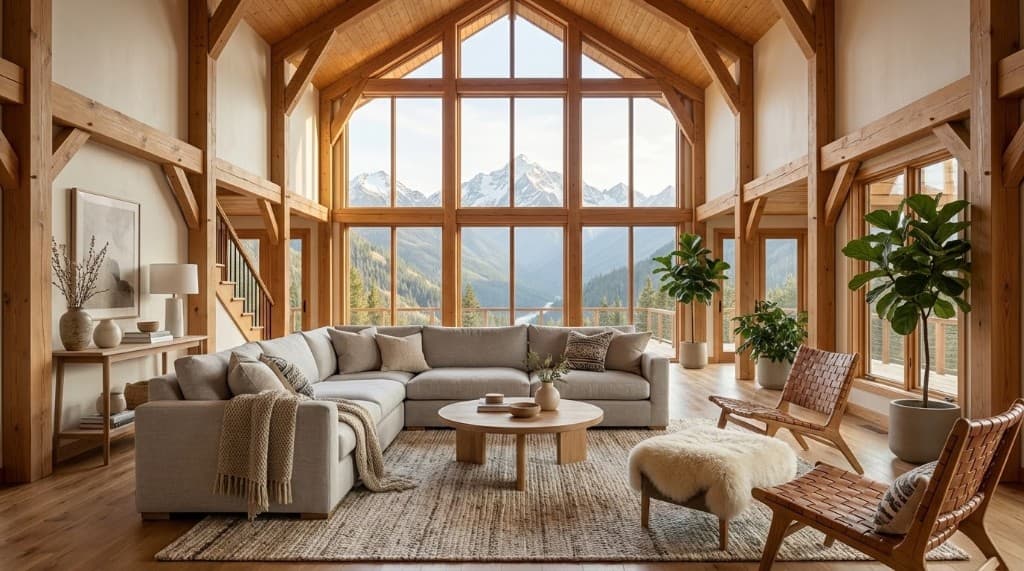
Interiors flooded with natural light feel open, healthy, and connected to the outdoors. This approach works best for spaces with large windows or skylights.
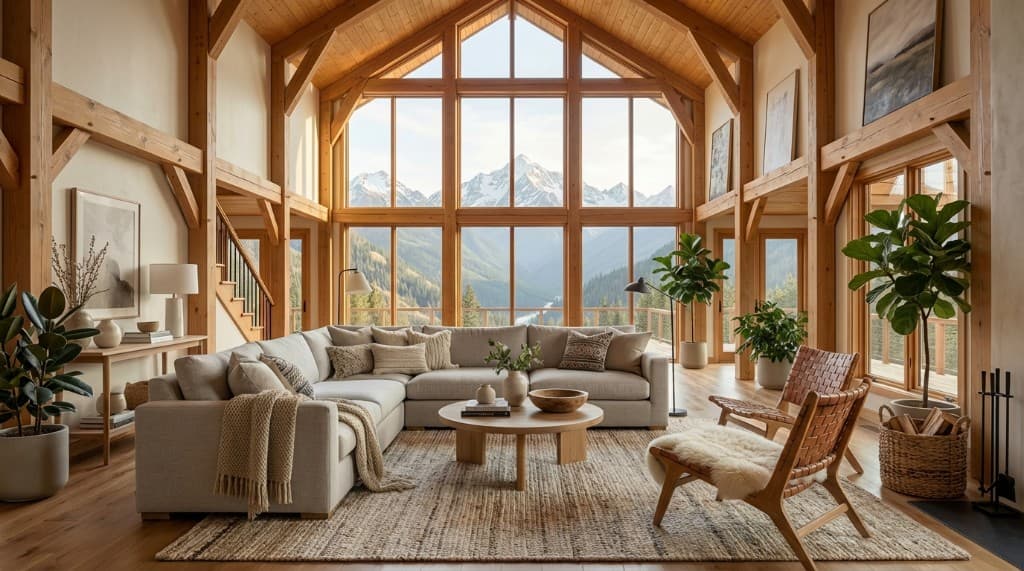
Natural light creates bright, airy interiors with soft shadows
Key Considerations:
- • Window placement determines light direction and shadow patterns
- • North-facing windows provide soft, consistent light
- • South-facing windows create stronger contrasts and warmer tones
- • Consider time of day—morning east light vs. afternoon west light
2. Mixed Natural and Artificial
Most real interiors use a combination of natural and artificial light. This creates depth and visual interest while ensuring all areas of the space are properly illuminated.
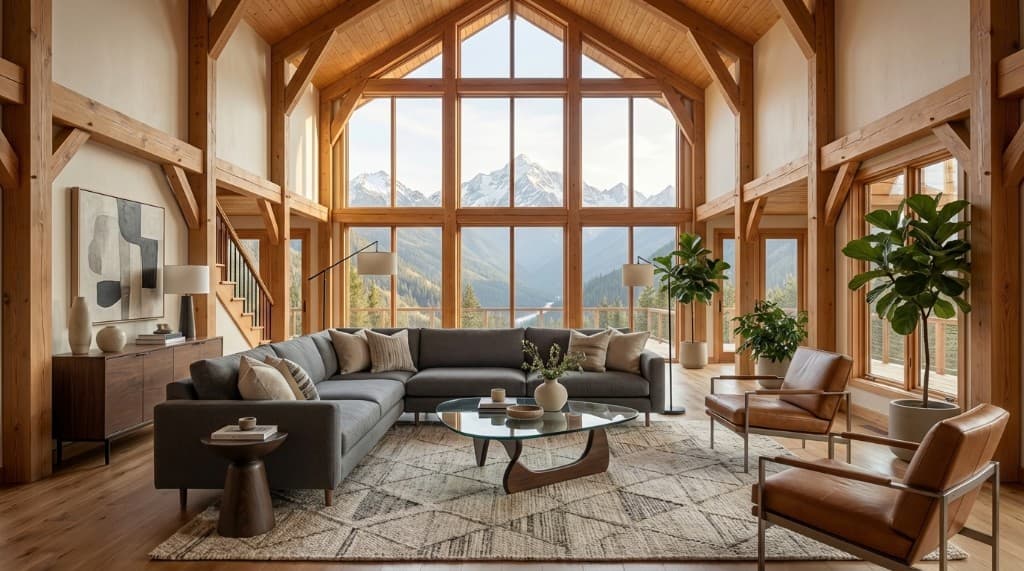
Mixed lighting adds depth and creates focal points within the space
Layered Lighting Approach:
- Ambient light: Overall illumination from windows and ceiling fixtures
- Task lighting: Focused light for specific activities (reading lamps, under-cabinet lights)
- Accent lighting: Highlights architectural features or artwork
3. Evening/Artificial Light Only
Evening interior renders rely entirely on artificial light sources. This creates intimate, cozy atmospheres and is excellent for showcasing lighting design as a feature.
Artificial Lighting Tips:
- • Vary light temperatures—cooler overhead, warmer accent lights
- • Include visible light sources (lamps, pendants) for realism
- • Use pools of light to create visual hierarchy
- • Don't over-illuminate—shadows add depth and drama
Common Lighting Mistakes to Avoid
Even experienced visualizers fall into these traps. Being aware of them will help you create more convincing renders:
Flat, Even Lighting
Lighting that's too uniform eliminates depth and makes spaces feel artificial. Embrace contrast and shadow.
Inconsistent Light Direction
Shadows pointing in different directions break the illusion. Ensure all shadows align with your light source.
Ignoring Bounce Light
In reality, light bounces off surfaces. A white wall near a window will reflect light into shadowed areas.
Over-Saturated Colors
Pushing sunset colors too far looks unnatural. Real golden hour is warm but not orange.
Achieving Great Lighting with AI Rendering
AI rendering tools like Rendershop understand lighting concepts and can generate realistic lighting scenarios from text descriptions. Here's how to get the best results:
Effective Lighting Prompts
For Warm, Inviting Exteriors:
"Residential home at golden hour sunset, warm directional light from the left, long soft shadows, orange sky gradient fading to blue, warm glow on facade"
For Dramatic Twilight:
"Modern villa at dusk, deep blue hour sky, interior lights warmly glowing through floor-to-ceiling windows, subtle landscape lighting, luxury atmosphere"
For Bright, Airy Interiors:
"Scandinavian living room with large north-facing windows, soft diffused daylight, white walls with subtle shadows, natural wood accents catching light"
For Cozy Evening Interiors:
"Modern living room at night, warm pendant lights over dining area, accent lighting on artwork, pools of light creating intimate atmosphere, city view through windows"
Lighting Scenario Gallery
Here are examples of different lighting scenarios rendered with Rendershop:
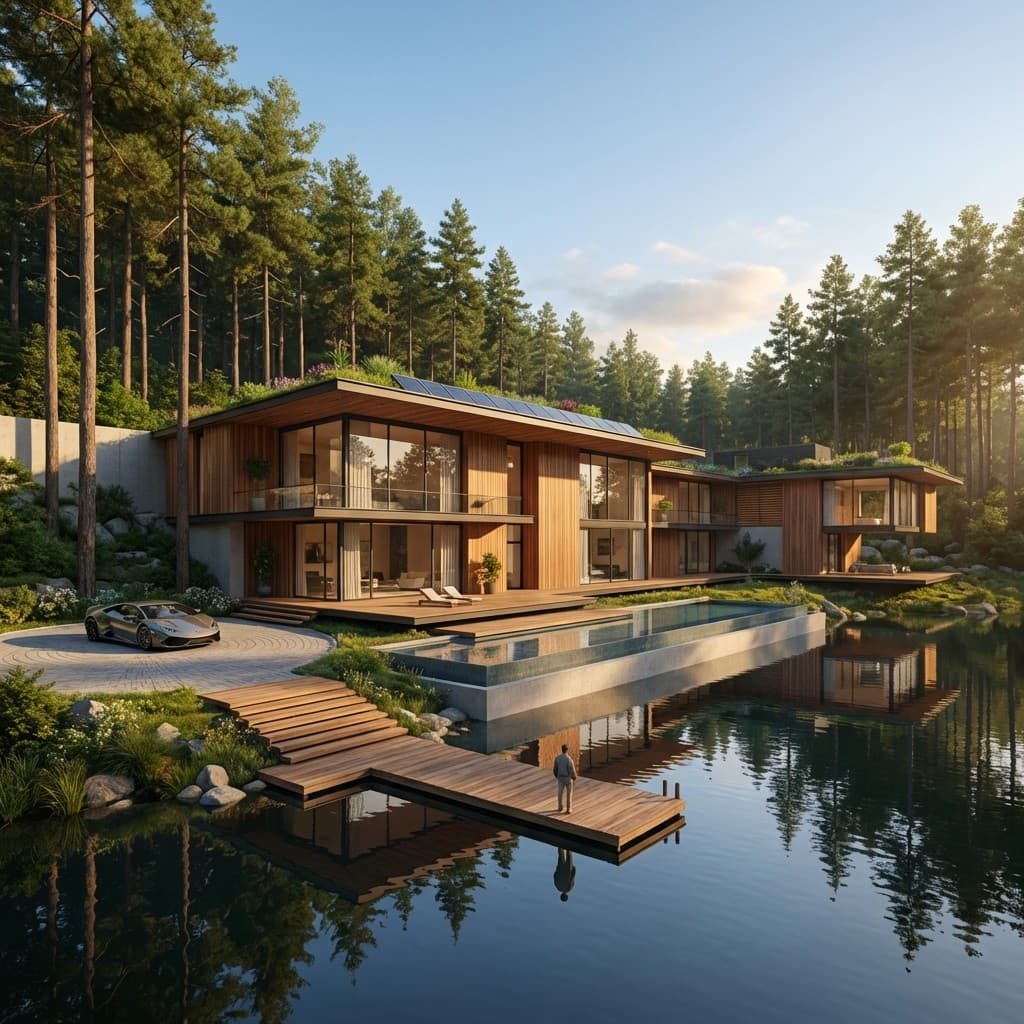
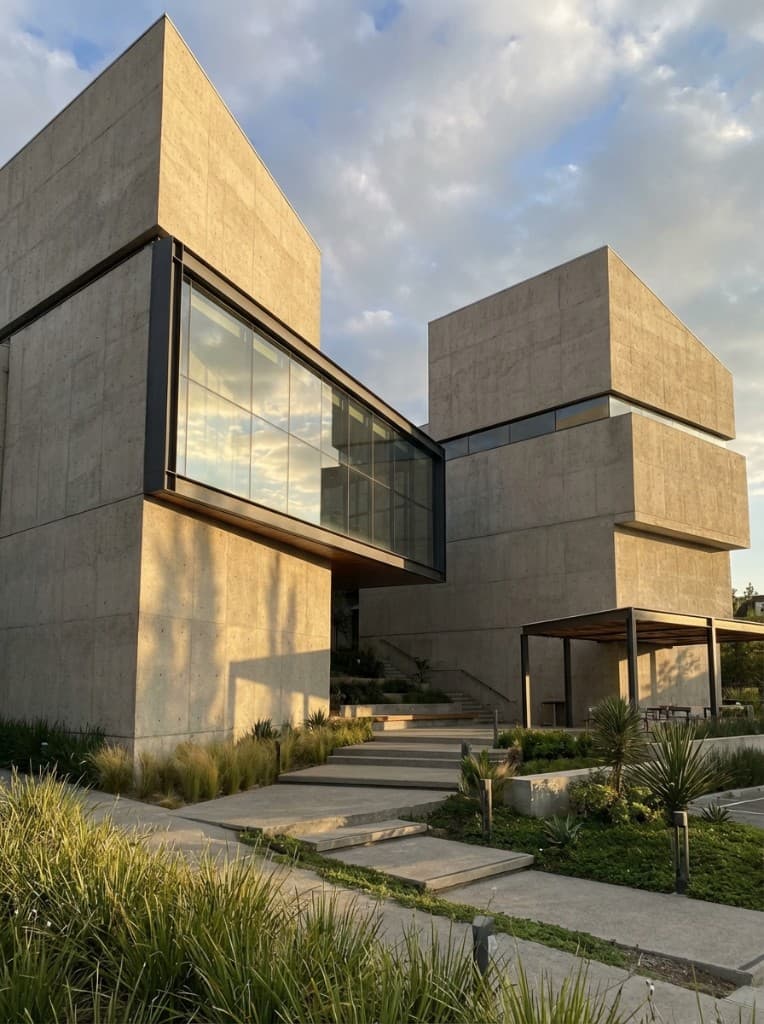
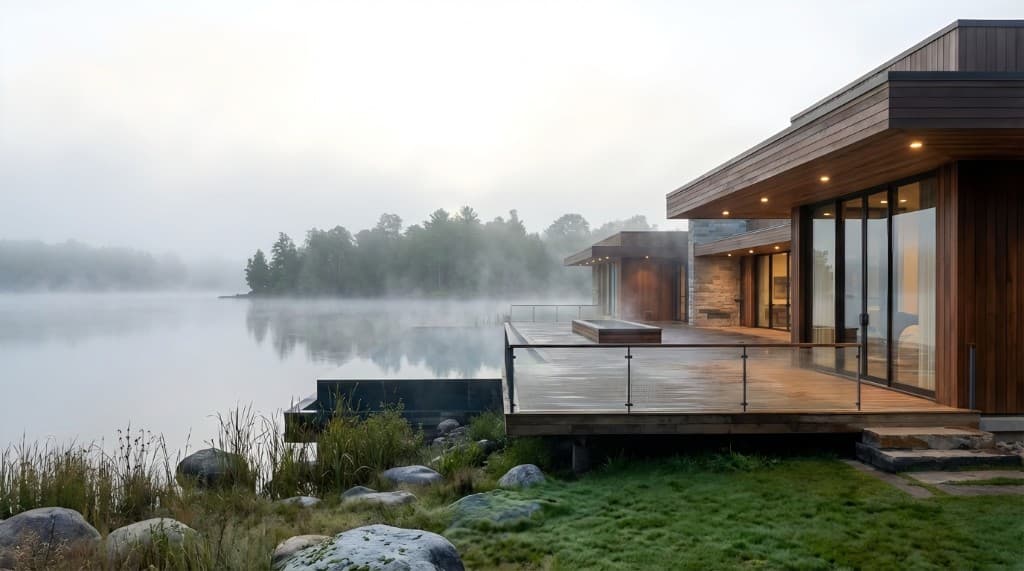
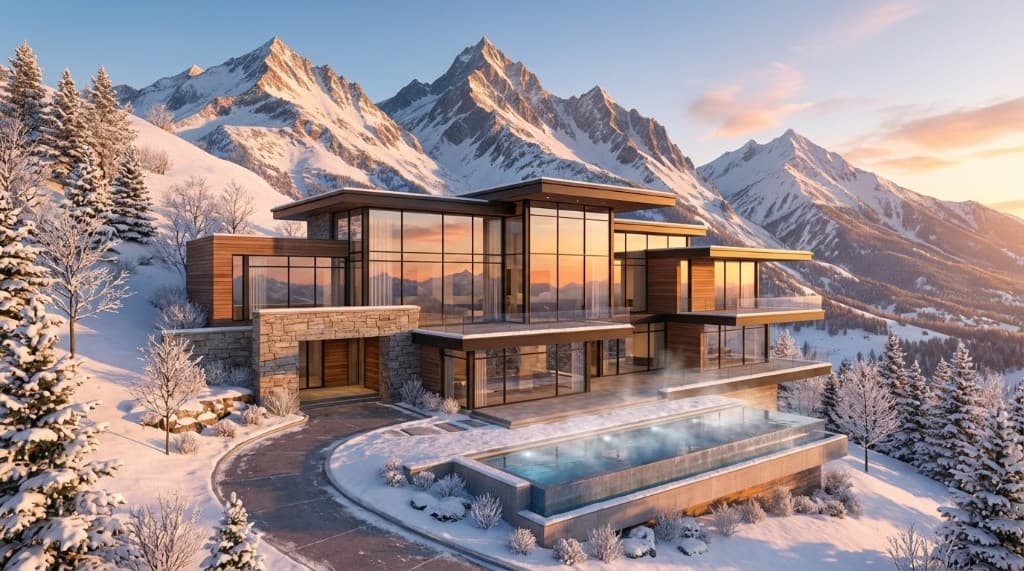
The same design can feel completely different with varied lighting
Light Your Way to Better Renders
Mastering lighting is one of the most impactful skills you can develop as an architectural visualizer. It's the difference between a render that documents a design and one that sells it.
Remember: lighting should serve your story. Ask yourself what mood you want to create, what features you want to highlight, and what emotional response you want from viewers. Then choose your lighting scenario accordingly.
With AI tools like Rendershop, experimenting with different lighting conditions is faster than ever. Generate multiple versions of the same design at different times of day, compare the results, and choose the one that best communicates your vision.
Create Beautifully Lit Renders
Experiment with lighting scenarios and find the perfect atmosphere for your designs. Start with 50 free credits—no credit card required.
— The Rendershop Team