Luxury real estate sells on emotion first, specifications second. A $3M listing competes for attention against private jets and yachts in the same buyer's consideration set, and the photography has to match that bar. The problem is that luxury properties are also the hardest to photograph well — they're often vacant between owners, mid-renovation, still under construction, or simply too large and detail-rich for a standard listing shoot to do justice. AI rendering has quietly become the tool top-producing luxury agents, developers, and marketing teams use to close that gap, turning ordinary listing photos, floor plans, and architectural renderings into the kind of polished imagery buyers expect at this price point.
This guide covers where AI rendering fits into luxury real estate marketing specifically — how it differs from standard-tier virtual staging, what it's best used for, and how to keep imagery credible with a buyer segment that scrutinizes every detail.
Why Luxury Listings Need a Different Standard
Virtual staging a starter home and virtual staging a $5M estate are not the same job. Luxury buyers — and the agents competing for their listings — expect furniture, finishes, and lighting that read as genuinely high-end, not generic stock staging. A cheap-looking sofa or an obviously synthetic pool reflection undermines the entire listing's credibility, in a segment where credibility is the product. At the same time, luxury properties are disproportionately likely to be vacant (second homes, estate sales, spec builds) or photographed under time pressure around a seller's move-out schedule, which is exactly when strong staging matters most.
The other wrinkle is scale. Luxury listings often include amenities that are hard to photograph well in a single frame — home theaters, wine cellars, guest houses, pool pavilions, motor courts — and marketing packages for these properties typically run to twilight exteriors, drone stills, and multiple staged looks per room rather than a single MLS photo set.
Where AI Rendering Fits in a Luxury Marketing Package
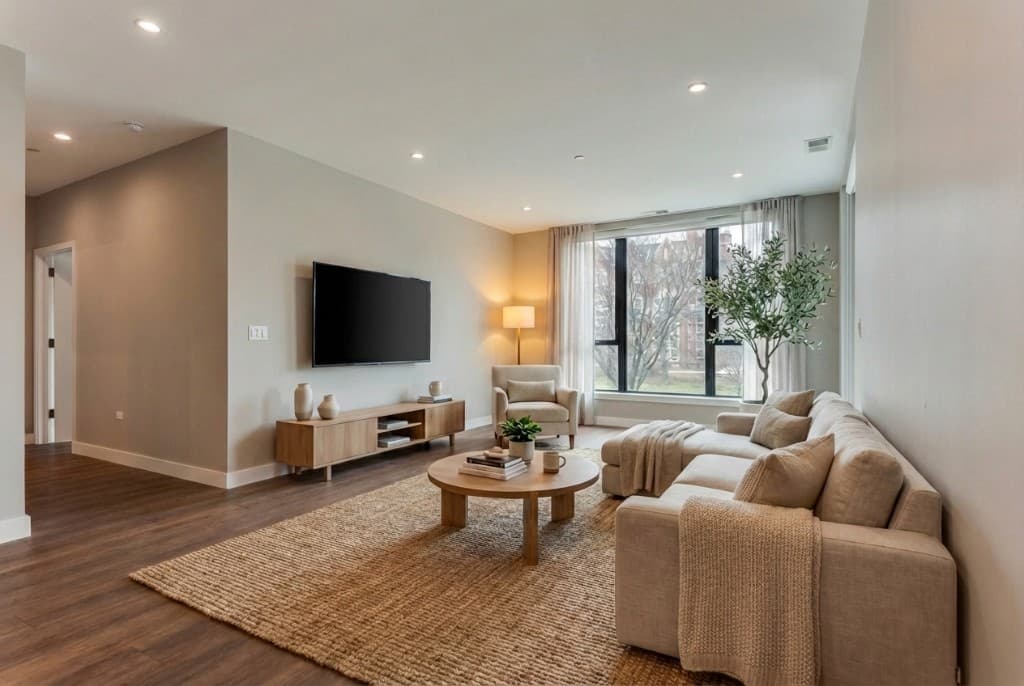
- Vacant estate staging: Furnish an empty great room, primary suite, or formal dining room with high-end furniture styles matched to the architecture — modern, transitional, or classic — instead of a one-size-fits-all staging look.
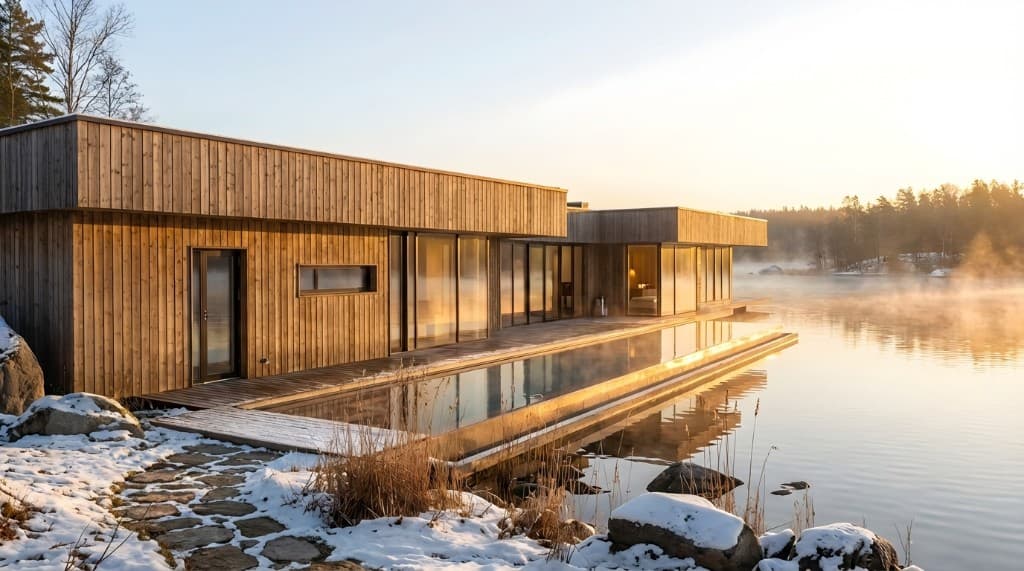
- Twilight exteriors: Convert a daytime listing photo into a warm, twilight-lit exterior with pool lighting, landscape uplighting, and interior glow — consistently the highest-performing image in luxury listing marketing.
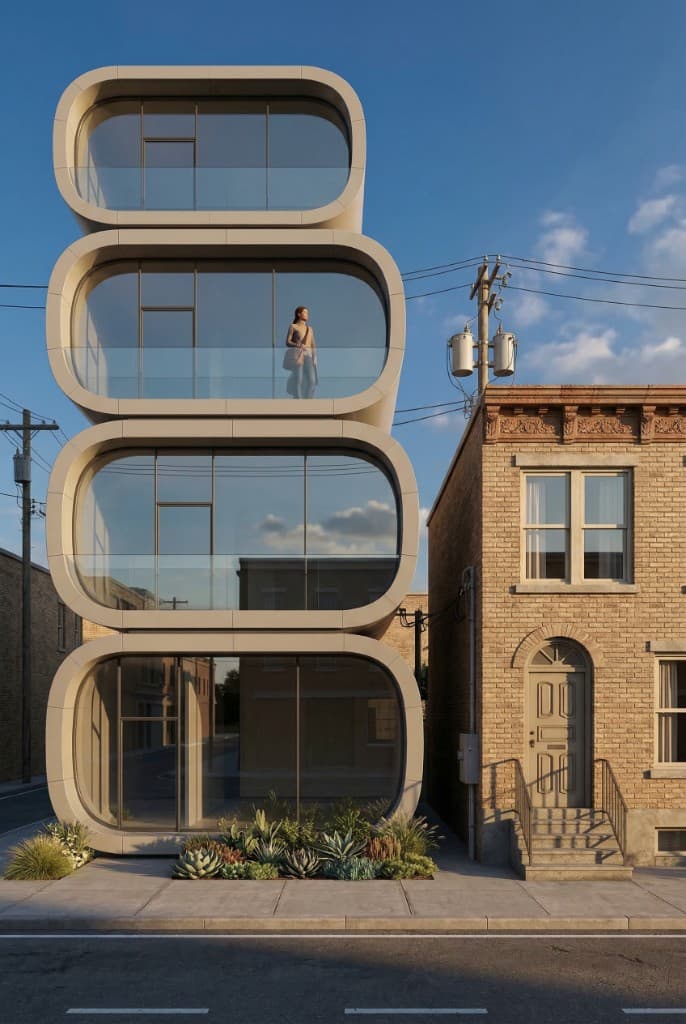
- Pre-construction spec homes: Turn architectural elevations and floor plans into photoreal renders so a builder or developer can list a spec estate before the final finishes are installed.
- Renovation visualization: Show a dated kitchen, primary bath, or pool area as it would look post-renovation, supporting a higher list price ahead of the work being done.
- Multiple design concepts: Generate two or three distinct furnishing styles for the same room so a listing can be A/B tested or tailored to different buyer profiles (e.g., a coastal vs. contemporary look for a beach property).
Standard Virtual Staging vs. Luxury-Tier AI Rendering
| Factor | Standard Listing Staging | Luxury-Tier AI Rendering |
|---|---|---|
| Furniture style | Generic, broadly neutral | Matched to architecture and target buyer (modern, transitional, classic estate) |
| Image count per listing | A handful of rooms | Full room set, twilight exterior, plus alternate concepts |
| Exterior treatment | Rarely included | Twilight, landscape lighting, pool glow standard practice |
| Turnaround | 1–2 days (outsourced studio) | Minutes per image with AI rendering |
| Cost per image | $25–$75 | A small fraction of that with AI, freeing budget for more variations |
A Workflow for Agents and Listing Marketers
- Shoot (or gather) clean base photos. Wide-angle, level, well-lit shots of each room and the exterior — see our guide to best photo settings for AI rendering for detail on getting source images that render well.
- Stage vacant rooms first. Empty primary suites, great rooms, and formal living/dining spaces get the highest lift from staging in luxury listings — buyers struggle most to picture scale and lifestyle in large, empty rooms.
- Generate a twilight exterior. This is typically the hero image for the listing's cover photo and social ad campaign.
- Produce 2–3 style variations for the primary suite or main living space, so the listing agent can choose (or A/B test) the look that resonates best with the target buyer profile.
- Layer in disclosure language per your state's requirements — most MLS systems require a "virtually staged" label on any digitally furnished photo. See our virtual staging disclosure rules guide for state-by-state specifics.
Keeping Luxury Renders Credible
Luxury buyers and their agents look closely at listing photos, and an over-processed or implausible render can do more damage than no staging at all. A few practices keep AI-rendered luxury imagery credible:
- Match furniture scale to the actual room dimensions — oversized or undersized staged furniture is the fastest way to break the illusion in a large-format luxury room.
- Keep architectural details unchanged. AI rendering should furnish and light a space, not alter windows, ceiling height, or structural elements from the real listing.
- Disclose virtual staging clearly on every platform the image appears, consistent with MLS and state rules.
- Use restraint on lighting effects. A twilight render with lighting that's physically impossible (light sources with no visible fixture, unrealistic reflections) reads as artificial to a sophisticated buyer.
Frequently Asked Questions
Is AI rendering acceptable for luxury MLS listings?
Yes, as long as it's clearly disclosed as virtually staged, per your local MLS and state real estate commission rules. AI-rendered images are widely used across luxury listings today; disclosure practice, not the technology itself, is the compliance requirement.
Can AI rendering match a specific high-end furniture style?
Yes. You can direct the style — modern, transitional, coastal, classic estate — to match the architecture and the buyer profile you're targeting, rather than defaulting to generic staging furniture.
How does AI rendering handle very large rooms or unusual layouts common in estate homes?
AI rendering works from the actual photo, so it respects the real room's proportions and layout. For unusually large or irregular spaces, using a wide-angle base photo and specifying furniture scale in your prompt produces the most accurate result.
Can I use AI rendering to market a luxury spec home before construction is complete?
Yes. Architectural elevations and floor plans can be converted into photorealistic exterior and interior renders, letting builders and developers market a luxury spec home ahead of completion.
Does AI rendering replace professional real estate photography for luxury listings?
No — it works from professional photography as its base. Most luxury marketing packages still start with a professional photo or drone shoot, then use AI rendering to stage vacant rooms, generate twilight versions, and produce style variations from those source images.
The Bottom Line
Luxury real estate marketing runs on imagery that feels effortless, even when the underlying property is vacant, mid-renovation, or still under construction. AI rendering gives agents, developers, and marketing teams a way to hit that bar — staged rooms in a matched furniture style, twilight exteriors, and pre-construction visualizations — without the cost and turnaround time of a traditional CGI studio for every image.
For more on getting the best source photos before you render, see our guide to best photo settings for AI rendering, or visit our pricing page to get started.
Make Your Luxury Listings Stand Out
Upload a listing photo and get a beautifully staged room or twilight exterior back in minutes. Try Rendershop free — no credit card required.
— The Rendershop Team